DE
DE
 EN
EN
Brown hare and wild rabbits as young animals
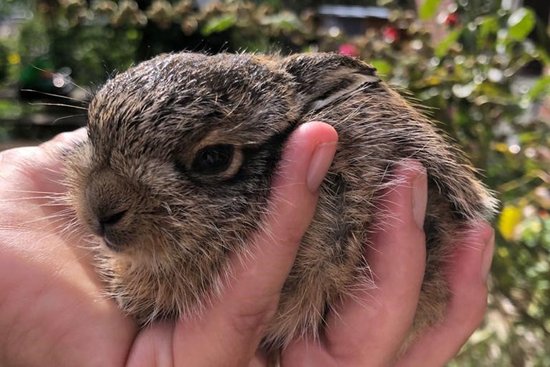
The brown hares are fully trained and born above ground in a so-called sasse, i.e. a hollow in the ground. The eyes are open, the pupil is black, the iris can be seen as a light brown rim. The fur is brownish, fuzzy and long, and they have a wide, hairy nose. The ears are black at the rear edge. The birth weight is between 80 and 150 grams. They are suckled once or twice, mostly at night.
Brown hares are born at the end of January and are well equipped for cold temperatures with thick fur. They just don't tolerate wetness well. They then cool down too quickly and the nutrient-rich breast milk is not enough to maintain their body temperature. Young rabbits are born until October.
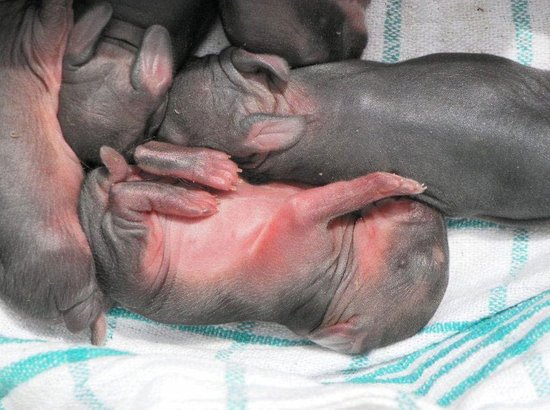
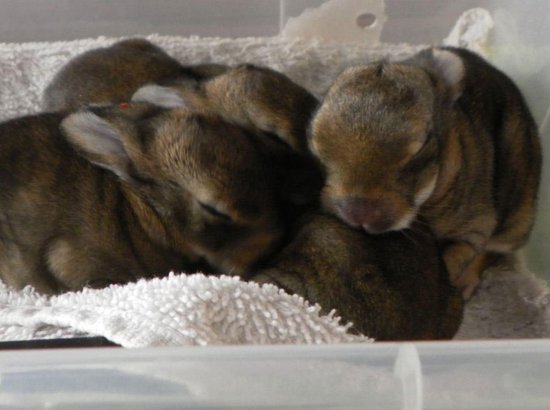
Wild rabbits are born naked, blind and deaf underground in a nesting tube. The mother rabbit only comes once a day and feeds her young for just a few minutes. Within the first week the fur grows, they can then hear and after 12 days their eyes open. They have black button eyes, the iris can be seen as a dark brown edge in sunshine. The fur is gray-brownish and short. The birth weight is around 40 grams.
Wild rabbits are born from March to September. They can grow underground for the first three weeks of life in a well-warmed place in a nesting tube filled with the mother's underbelly hair and a mixture of grass and hay.
Motherless hand rearing
The milk of all wild animal species is low in lactose. Therefore, breeding with lactose-rich cow's milk is not suitable. The result is indigestion, which often ends fatally. There are some milk replacers available commercially for kittens or dogs that are suitable for hand-rearing brown hares and wild rabbits. The success of breeding depends, among other things, on whether the young animal has received the vital antibodies from the colostrum of its mother's milk.
For newly born hares and rabbits, I use goat colostrum, which I get from a neighboring goat farm, freshly bottled in small portions and freeze. Alternatively, you can buy colostrum in liquid form or as a powder.
Brown hares usually don't need any additional heat, but naked rabbits do. I use a chick warming plate with an adjustable temperature. The rabbits lie in a box in a slightly damp cloth at approx. 35 to 37 °C. Once they have grown fur, I gradually turn the temperature down to room temperature.
The mother's milk of hares and rabbits is very nutritious with 20 to 23% fat, the protein content is around 10 to 12%, depending on the season and the food available. This should be taken into account when formulating the milk replacer in order to prepare the right mixture. I mixed one part milk powder with three parts fennel-anise caraway tea and some herbal additives. To prevent indigestion, I keep the protein content a little lower, but by adding oils I achieve a fat content of around 20%. Rabbits are gourmets and need a variety of herbs. Up to 70 different herbs have been found in rabbit stomachs (Zörner 1996).
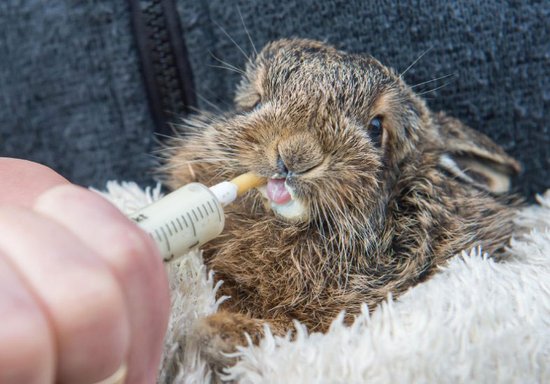
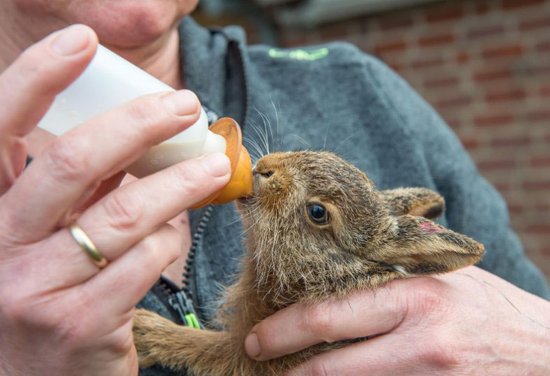
A large proportion of the fat in breast milk (about 66%) comes from dietary fatty acids and not from de novo synthesis (DEMARNE et al. 1978). RodiCare akut® is an oily herbal mixture that I add to the milk mixture to enrich it. The herbal mixture has a calming effect on the digestive system and improves the transition to milk replacer. The calcium phosphate concentration of the substitute milk is of great importance. In young rabbits in particular, bone fractures occur in the first weeks of life due to a lack of calcium. As a precaution, I enrich the milk with minerals. As long as no vitamin-rich appendix feces can be eaten, I add RodiCare® Vita B to the milk and give it a probiotic. The mixed milk should be at body temperature. Feeding, initially with a syringe, requires patience. The little ones have to get used to it. As soon as a sucking reflex begins, I feed with a small bottle.
A rough guideline for the amount of milk is:
The stomach contents hold 5% of the total weight, 20% should be achieved as a daily ration (Florian Brandes, Foundling Animals).
Example: A young animal weighing 100 grams should drink 20 ml of milk per day. 5 ml is a portion that is fed 4 times a day. Rabbits are also allowed to drink more; for rabbits, these drinking quantities should be adhered to. Otherwise they could be overfed and this leads to digestive problems.
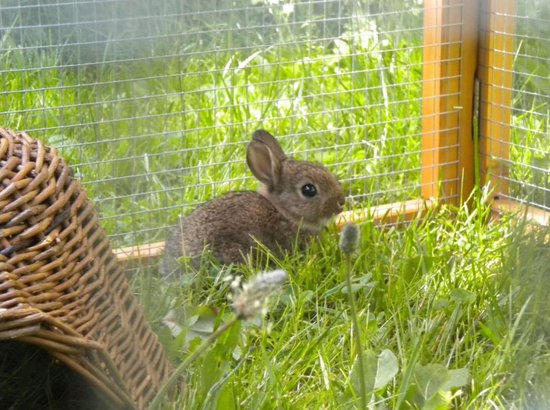
I try to raise the young animals as species-appropriately as possible. I keep rabbits outside right from the start. They get fresh hay, water and mole soil. I sowed a wild field mix “The Rabbit Pharmacy” in the enclosures. Small wild rabbits live underground for the first three weeks, which is why I only offer them fresh food after three weeks, such as: B. grated carrots, parsley and dandelion. They eat hay and hearty oatmeal when they are 10 to 12 days old.
Depending on how quickly a brown hare becomes shy again, I release it into the wild after 7 to 10 weeks. It then has a weight of 800 to 1500 grams. Wild rabbits stay in the enclosure for 10 to 12 weeks. They are then large and fast enough to be able to flee from their predators.