DE
DE
 EN
EN
Osteoarthritis
What is osteoarthritis?
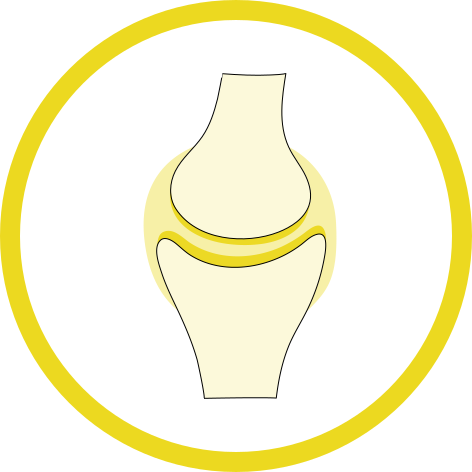
Osteoarthritis or arthrosis is excessive, progressive wear and tear in the joint, which is accompanied by inflammatory reactions and in which initially the cartilage and later also the bony parts of the joint are affected. The joint's function becomes more and more restricted and the quality of life becomes more and more impaired due to the pain that occurs.
What are the causes of osteoarthritis?
The causes of osteoarthritis are varied. Age, genetics, bacterial infections, rapid growth during adolescence and feeding play a role. Joints that are subjected to great stress are particularly often affected. Accordingly, the development of osteoarthritis is caused by excess weight and incorrect loading due to orthopedic misalignments (e.g. hip joint dysplasia) or injuries, but also promoted or accelerated by overuse of sport.
Pay attention to the first signs
Due to the decreasing ability to move, the dog sometimes appears older than it really is. Watch for behavior changes. Lameness, decreasing willingness to play, difficulty getting up, refusing to climb stairs or jumping into the car can be signs of osteoarthritis. Typically, stiffness and lameness occur especially after periods of rest and subside when the dog has “broken in.” Increased gnawing on a joint or frequently changing lying positions are also possible signs of osteoarthritis. If you observe these symptoms in your dog, you should consult a veterinarian. The sooner the diagnosis of “osteoarthritis” is made and an appropriate treatment plan is implemented, the better it is for your animal. How is osteoarthritis diagnosed? The veterinarian makes a presumptive diagnosis based on the previous report, the symptoms present and the clinical examination. In order to confirm this and rule out other diseases of the musculoskeletal system, the affected joints must be x-rayed.
How is osteoarthritis diagnosed?
The veterinarian makes a presumptive diagnosis based on the previous report, the symptoms present and the clinical examination. To confirm this and rule out other diseases of the musculoskeletal system, the affected joints must be x-rayed.
What treatment options are there for osteoarthritis?
Unfortunately, osteoarthritis cannot be cured nor can the progression of the disease be permanently prevented. Once the joint cartilage is damaged, it cannot be completely repaired. However, since no other organs are otherwise attacked, the affected animals can still live very old. The aim of treatment is to stop the progression of the disease to slow down as much as possible and increase the quality of life of the osteoarthritis patient by relieving pain and improving mobility.
Various medicines from the groups of so-called steroidal and non-steroidal anti-inflammatory drugs (NSAIDs) are available to treat pain and reduce inflammation.
Phytotherapeutics (herbal remedies) can also be used long-term to relieve pain.
Overweight animals should definitely lose weight. Every gram too much on the ribs puts unnecessary strain on the aching joints. Also
If it's difficult, a reduction diet is important because less weight means less pain for your dog.
Since the cartilage tissue is not supplied with blood, the cartilage cells can only be supplied with building materials by pressing nutrient-rich water into the spongy cartilage structure through movement.
When there is pain, the dog moves less and the exchange of substances in the cartilage is disrupted, which further contributes to the deterioration of joint function.
In the case of joint damage, it is advisable to protect the painful joints, but not to completely immobilize them. Violent or sudden movements should be avoided. However, controlled movement supports the exchange of substances in the articular cartilage, strengthens the muscles and keeps the joints mobile. An ideal form of exercise is swimming, but walks on a leash and limited play (no wild romping or running) are also suitable. The rule is “moderately but regularly”. This means that several short exercise sessions throughout the day are better than one long one.
Certain nutrients that are required for cartilage tissue and synovial fluid can be specifically fed. The substances that have a positive effect on joint metabolism primarily include the so-called glucosaminoglucans (GAGs) and certain omega-3 fatty acids.
CaniGum® Artrin is a dietary supplement that is specifically tailored to the nutritional needs of joint metabolism. It contains various nutritional components that are known to contribute to joint health.
This is particularly true for glucosaminoglucans (GAGs) and the long-chain omega-3 fatty acids eicosapentaenoic acid (EPA) and docosahexaenoic acid (DHA).
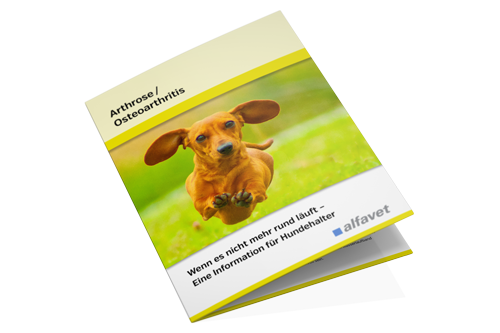
Both medicines and supplementary feed, which are often used in combination, can help with joint diseases. But simple measures such as weight control and exercise therapy are just as important and can significantly alleviate symptoms.
Please discuss the therapy best suited to your animal with your veterinarian.
Download brochure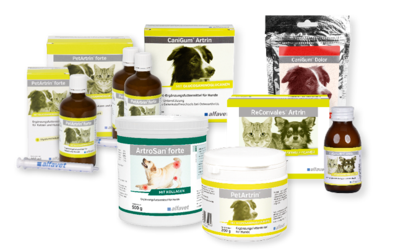
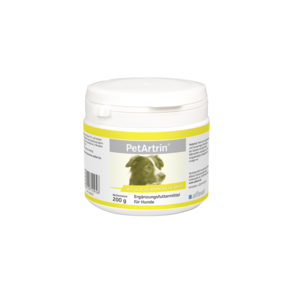
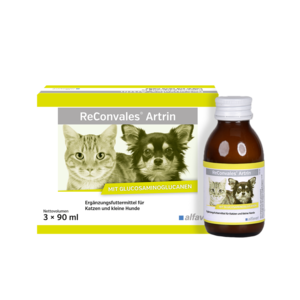
PetArtrin®, PetArtrin® forte, CaniGum® Artrin, ReConvales® Artrin
When things no longer run smoothly
What is contained in CaniGum Artrin?
Glucosaminoglucans (GAGs)
GAGs are important cartilage building materials that enable the cartilage to absorb water. They are therefore essential for the elasticity of cartilage tissue. CaniGum® Artrin contains both chondroitin sulfate and glucosamine in high concentrations (over 10% in total).
EPA and DHA
The long-chain omega-3 fatty acids eicosapentaenoic acid (EPA) and docosahexaenoic acid (DHA), found in fish oil, have a greater impact on joints than plant-based omega-3 fatty acids. Various studies have shown that dogs with osteoarthritis benefit from supplementing with EPA/DHA-rich fish oil.
Manganese
Manganese is an essential coenzyme for cartilage metabolism. A sufficient supply of manganese helps prevent cartilage damage. In addition, it contains CaniGum®
Artrin willow bark extract and devil's claw extract.
How is CaniGum® Artrin administered?
CaniGum® Artrin are portionable soft chew bars. Each chew bar is individually wrapped and consists of 7 portions that can be easily broken off. CaniGum® Artrin is given to the dog as a treat. Due to its consistency, CaniGum® Artrin is even popular with old dogs with dental problems. The soft structure of CaniGum® Artrin is also suitable for hiding additional tablets to be administered (e.g. painkillers) and thus making tablet entry easier.
Certain food components can have a positive effect on the joint metabolism of dogs with osteoarthritis. In CaniGum® Artrin, these joint-active substances have been packaged in delicious, soft chewing bars so that they can easily be administered in portions in a concentrated form.
Try it: your dog will love these treats!
Featured Products
Our products are only available through veterinary practices. Information about the medicines can be found after login.